
Days before Diwali, the monthly economic review by the finance ministry has highlighted moderation in urban demand, softening consumer sentiments and limited footfall as areas that need to be watched. In its review, released on Monday, the ministry also noted the early signs of artificial intelligence displacing workers, as described in anecdotal reports. The commentary from several large consumer goods companies, including Nestl India, Hindustan Unilever, and ITC, in their recent quarterly earnings, has been around a sluggish urban demand. Rural consumption, however, has mostly seen a revival, the companies pointed out.

'There are occasions when the prices of individual items like food raise inflation; then supply-side measures must be taken.' 'But if there is continued inflation, it means liquidity is aggravating the situation.'

Share prices of Nestle India, Asian Paints, Bandhan Bank, Tata Technologies, AU Small Finance Bank and Avenue Supermarts, all a part of the BSE 500 index, have hit their respective 52-week lows on the BSE in Thursday's intra-day trade after a sharp correction in the equity markets.
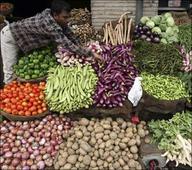
The CII has suggested a 5-point agenda on the measures that need to be undertaken by central and state governments to stave off the adverse effects of a deficient monsoon. Let's find out what this agenda is. . .

India's services PMI recovered from its ten-month low in September to reach 58.5 in October supported by strong expansions in output and new business, which in turn boosted job creation, a monthly survey said on Wednesday. The seasonally adjusted HSBC India Services Business Activity Index increased from 57.7 in September to 58.5 in October, as robust sales pipelines and strong demand conditions supported the upturn in business activity. In the Purchasing Managers' Index (PMI) parlance, a print above 50 means expansion, while a score below 50 denotes contraction.

Factory output, measured in terms of Index of Industrial Production, showed an improvement mainly because of an uptick in mining and manufacturing production and larger offtake of capital goods.

Deloitte India on Friday said it estimates India's GDP growth at 6.6 per cent in the current fiscal helped by consumption expenditure, exports rebound and capital flows. In its India's economic outlook report, Deloitte said the rapid growth of the middle-income class has led to rising purchasing power and even created demand for premium luxury products and services. With the expectation that the number of middle-to-high-income segments will be one in two households by 2030/31, up from one in four currently, we believe this trend will likely become further amplified, driving overall private consumer expenditure growth, it said.

Here is a list of items set to become cheaper and costlier.
The Reserve Bank is unlikely to ease the benchmark policy rate during 2024 given the uncertainty over food inflation, State Bank of India (SBI) chairman C S Setty has said. The US Federal Reserve's first cut in interest rates in more than four years is expected soon, triggering central banks in other economies to follow suit. "On the rate front, a lot of central banks are taking independent calls.

Goods from sectors, including agriculture, precious stones, chemicals, pharma, medical devices, electricals, and machinery may get impacted if the US will go ahead with imposing reciprocal tariffs on Indian products, according to experts. They said that these sectors could face additional customs duties from the Trump administration because of the high tariff differential or gap, which is the difference between the import duties imposed by the US and India on a product.

The BSE Healthcare Index is up 19 per cent as compared to BSE Sensex returns of 11 per cent during this period. Nitin Agarwal of DAM Capital highlighted this trend in a report last month. "After a sustained period of underperformance over FY21-23, the BSE Healthcare Index has once again captured the spotlight. "The recent uptick in performance has been driven by hospitals and emerging green shoots in pharmaceutical exports, particularly to the US, along with sustaining momentum in domestic branded formulations," he said.

Dabur's performance in the July-September quarter of the current financial year (Q2FY25) was weak but in line with consensus. Consolidated revenue declined 5 per cent year-on-year (Y-o-Y) due to a temporary adjustment in General Trade (GT) inventory. Indian revenue declined 7.6 per cent, while international business grew 13 per cent Y-o-Y in constant currency (CC) terms.

A Competition Commission probe has found that food delivery platforms Zomato and Swiggy indulged in unfair business practices, including alleged preferential treatment to some restaurant partners, according to sources. The detailed investigation was ordered by the Competition Commission of India (CCI) in April 2022 and the probe report was submitted to the regulator earlier this year. Under the norms, CCI director general's report has been shared with the parties concerned and later, they will be called for hearings by the watchdog.

Among the Sensex firms, IndusInd Bank, Maruti, Titan, Reliance Industries, NTPC, Mahindra & Mahindra, Larsen & Toubro, Kotak Mahindra Bank and HDFC Bank were the major laggards. UltraTech Cement, JSW Steel, Axis Bank, Tata Consultancy Services, Wipro and ITC were the major gainers.

India's wholesale prices declined at a faster-than-expected annual rate of 2.33 per cent in March.

India achieved the distinction of being the second fastest growing economy amid the global recession in 2009, but the joy was marred by the decade's sharpest rise in food prices to the chagrin of common man.
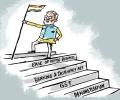
As the Ukraine conflict impacts the global GDP, India is projected to grow by 6.4 per cent in 2022, slower than the last year's 8.8 per cent but still the fastest-growing major economy, with higher inflationary pressures and uneven recovery of the labour market curbing private consumption and investment, according to a UN report. The UN Department of Economic and Social Affairs said in its World Economic Situation and Prospects (WESP) report released on Wednesday that the war in Ukraine has upended the fragile economic recovery from the pandemic, triggering a devastating humanitarian crisis in Europe, increasing food and commodity prices and globally exacerbating inflationary pressures. The global economy is now projected to grow by only 3.1 per cent in 2022, down from the 4.0 per cent growth forecast released in January 2022.

Many Indian ports were paralysed on Wednesday and food prices nationwide started soaring as a truckers strike dragged into its third day.

GDP growth of 7.7 per cent in the first half of this fiscal has "left sceptics gasping and woefully behind the curve", an RBI article said on Wednesday. It also stressed the buildup in the growth momentum is likely to be sustained. The article on the state of the economy published in the Reserve Bank's December Bulletin on Wednesday also said CPI-based retail inflation is expected to ease to 4.6 per cent in the first three quarters of 2024-25 from 5.6 per cent in November.

Retail inflation rose marginally to 4.91 per cent in November, mainly due to an uptick in food prices, government data showed on Monday. The Consumer Price Index (CPI) based retail inflation was 4.48 per cent in October 2021 and 6.93 per cent in November 2020. As per the data released by the National Statistical Office (NSO), food inflation was at 1.87 per cent in November this year compared to 0.85 per cent in the preceding month.

The central bank is widely expected to increase the repo rate by 25 basis points on Tuesday to 7.75 per cent to fight inflation even as it continues to unwind its rupee defense steps, a Reuters poll showed.

In calendar year 2024, the stock price of Trent has zoomed 160% As compared to the 18% rally in the BSE Sensex during the same period. It has outperformed the market in the past 10 consecutive years.

As a panel of senior ministers deliberates on the need to review curbs on exports of some rice varieties, data shows that since outbound shipments saw restrictions in July-August last year, the non-basmati segment has suffered more than basmati exports. Sources said the panel is expected to soon deliberate on a few suggestions to ease the export curbs on some rice varieties due to higher-than-required stocks in the central pool. The panel, some observers feel, may also postpone the decision to ease the export curbs till a firm picture emerges on the latest kharif paddy sowing.

Demonetisation was not a good idea and the time should have been utilised instead to fine-tune the Goods and Services Tax before it was introduced, said Gita Gopinath, John Zwaanstra Professor of International Studies and of Economics at Harvard University, in an interview with Advait Rao Palepu.

Prime Minister Narendra Modi on Friday said the government is committed towards procurement of agri crops at minimum support price (MSP) and termed it as an important part of the country's food security. He further said that efforts are being made to improve mandi infrastructure so that MSP buying continues in a scientific way.

'Investors can consider staying invested in long duration products as there is a possibility of rate cuts in the near term.' Positive macros - lower inflation, high forex reserves and favourable demand-supply dynamics for government bonds - make a strong case for rate cuts from December, says Devang Shah, head of fixed income, Axis Mutual Fund. In an interview with Abhishek Kumar in Mumbai, Shah says this view may not hold true if commodity prices go up sharply.

The rhythmic sound of the oars hitting the water and the sight of countless pilgrims chanting along the riverbanks created an unforgettable atmosphere, says Varalaxmi Sompuri.
While Birla did not specify the financial implications of the move, sources said the Lok Sabha Secretariat can annually save more than Rs 8 crore with the subsidy coming to an end.
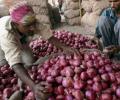
The government on Saturday imposed a 40 per cent duty on the export of onions to increase domestic availability amid signs of increasing prices. The export duty, which is the first time ever on onion, has been imposed as the retail sale price of the kitchen staple, according to government data, touched Rs 37/kg on Saturday in Delhi. The finance ministry through a Customs notification imposed a 40 per cent export duty on onions till December 31, 2023.

Sales of fast-moving consumer goods (FMCG) witnessed significant recovery in September after enduring a double-digit decline in August, according to data furnished by Bizom. Kirana stores in rural areas stocked up in preparation for the festival season, which began in September. This, combined with rainfall reaching 113 per cent of the long-perid average for the month, contributed to a boost in sales.
India is among the three least-favoured Asian stock markets, according to BofA Securities whose survey found that 10 per cent of fund managers are underweight on Indian equities from a 12-month perspective.

Wholesale inflation rate declined marginally to 0.2 per cent in February compared to 0.27 per cent in the preceding month despite a slight uptick in the food basket. The Wholesale Price Index (WPI)-based inflation was in the negative zone from April to October and had turned positive in November at 0.26 per cent. The inflation in February 2023 was 3.85 per cent.

India's real GDP growth will decline marginally to 6.3 per cent in 2024 from the 6.4 per cent estimated for 2023, an American brokerage firm said on Monday. The next calendar year will be of two halves, wherein the government spending before the upcoming General Elections will be the key driver for growth, while after the elections, it will be the re-acceleration in investment growth, especially from the private sector, Goldman Sachs said in a report. From a fiscal year perspective, the brokerage said it expects growth to accelerate to 6.5 per cent for FY25 from the 6.2 per cent it has projected for the ongoing FY24, it added.

The Gujarat Cooperative Milk Marketing Federation (GCMMF), which markets its dairy products under the Amul brand, on Tuesday increased the prices of its Gold, Taaza and Shakti milk brands by Rs 2 per litre. The new prices will be effective from Wednesday, the GCMMF said in a statement. This price hike is being done due to an increase in the overall cost of operation and production of milk, it said.

Leading FMCG firms reported a nearly two-fold increase in the share of quick commerce within their total e-commerce sales, and this surge is anticipated to continue, said a joint report by Deloitte and industry body FICCI. Quick Commerce, also known as hyperlocal delivery, is now reaching around 35 per cent of online sales and has become a preferred channel for urban consumers. "About 18 per cent of consumers prefer purchasing food and beverage items from Q-commerce channels.
Food prices have been on the rise in China this year, pushing the country's inflation rate to 3.4 per cent in May compared with a year earlier, higher than the government's warning level of three per cent.

Industry associations and companies in the United States, including the US Chamber of Commerce, Coalition of Services Industries and the iconic bike company Harley Davidson have called on the Donald Trump dispensation to push India to reduce tariffs, non-tariffs, and regulatory barriers to boost American exports.

India's manufacturing sector growth eased slightly in July, on softer increases in new orders and output, while cost pressures and demand strength led to the steepest increase in selling prices since October 2013, a monthly survey said on Thursday. The seasonally adjusted HSBC India Manufacturing Purchasing Managers' Index (PMI) moderated slightly from 58.3 in June to 58.1 in July.

'Food inflation is important and if that is controlled, then consumption will go up.'

India's fast-moving consumer goods (FMCG) sector witnessed growth in rural consumption in volume terms outpace urban consumption for the first time in five quarters, in the January-March period. According to a report from consumer intelligence firm NIQ, rural consumption grew at a rate of 7.6 per cent year-on-year (Y-o-Y) in Q1CY24, overtaking that in urban areas which stood at 5.7 per cent.
